More Than Just a Patch of Dirt: Our Favorite Campgrounds of the Past Year
As we inch closer to a full year of being on the road, we’re starting to look back at where we’ve been and what we’ve learned. We’ve covered a lot of ground, seen parts of the country that we didn’t know existed, and slept in every type of place imaginable. While we stayed in several spots that we wanted to forget before we’d even left, we also stumbled onto some truly beautiful and welcoming places that made our little tent feel like a resort. And since 80% or so of our lodging is in camping form, we’ve become amateur campground connosieurs. Read on for our favorite campgrounds over the past 7500 miles.
Top 5 Public Campgrounds
1. Twanoh State Park – Hood Canal, Washington
We arrived at Twanoh State Park around noon, after only riding 12 or so miles. We stopped to have lunch and look out over the water. After a relaxing hour-long break, we decided it was just too amazing a location to pass up and we stayed the night.
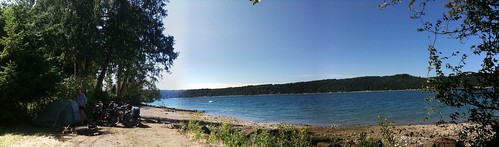
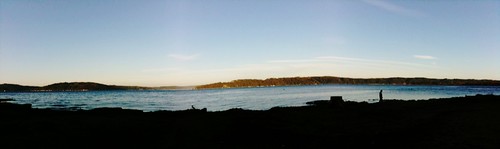
Twanoh State Park is part of the Cascade Marine Trail, meaning that it has campsites that are only available to people who arrive by human power. Given that we arrived by bicycle (and, thus, human power), we were able to camp in a small space right on the water’s edge in the day-use portion of the park. We were across the street from the main campground, meaning that there were no other campers nearby. At dusk, the rangers locked the gate, and the whole area on the water was left just for us. Waves lapping tenfeet from the picnic table and tent, a rocky beach to explore when the tide is low, a sky full of stars at night – we felt like we had stumbled onto a little slice of heaven.
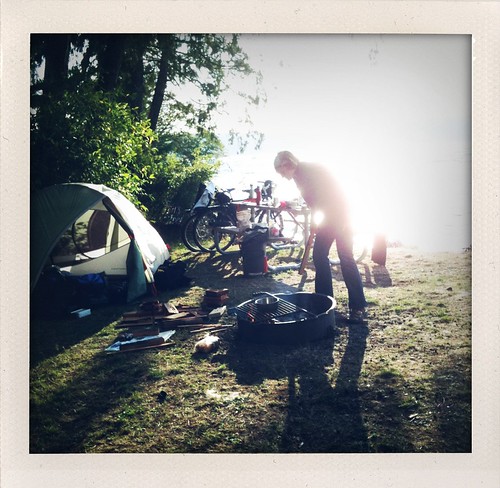
Twanoh is nestled amongst residences along the Hood Canal, meaning that it is relatively quiet (there is only traffic noise, but it’s relatively light). There are no services nearby, except for a few mini-marts within 10 miles in either direction (but these mini marts have locally-caught smoked salmon!). Showers are available in the park, and there is a small snackbar that’s open during the summer (we thoroughly enjoyed their fudge bars!). Camping is $14 per night (primitive).
2. Picacho Peak State Park – Arizona
We pulled in to Picacho Peak State Park on our way south into Tucson. It is just off I-10, to the west, but it is set in the hills several hundred feet above the freeway, makingit blissfully quiet and peaceful. When we first pulled in to the campground, we werestunned by how beautiful it is and how surprisingly tucked-away you feel.
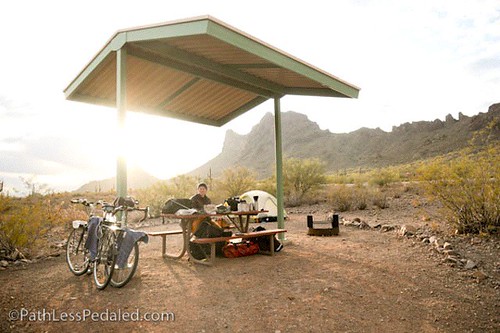
Picacho Peak is a small mountain in the middle of the desert, surrounded by cactus. It has a beautiful and fascinating history, and there are hiking trails that criss-cross the area, allowing you to climb up to stunning viewpoints. The campground, itself, is broken into electric and non-electric sites, meaning that most generator-running RVs are in one area, and tenters are able to separate themselves from the noise. We chose a spot up on the hillside, which gave us an amazing view of the valley below and the stars at night. The facilities at Picacho Peak are brand new, having been recently remodeled to be more sustainable. The visitor’s center is LEED certified, and the restrooms in the campground feel like a spa.


Picacho Peak was slated to be closed this spring, due to budgetary shortfalls. However, I’m happy to say that it looks like a group of concerned Arizonans banded together and saved the park, so it’s still open for others to enjoy! Camping is $15/night (non-electric),plus $3 entry fee (if not in automobile).
3. Elk Prairie Campground – Prairie Creek Redwoods, California
The route to Elk Prairie Campground is a small two-lane road that winds through thick redwood forest. If you’re coming from the North, you coast slowly downhill through the trees, tucked in a pocket of magical silence. After several miles, the forest opens up to a clearing – a prairie that is popular with the local elk herd, and a campground.
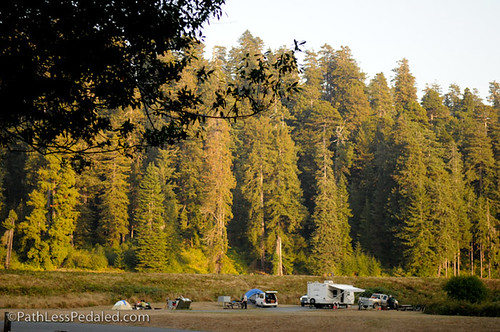
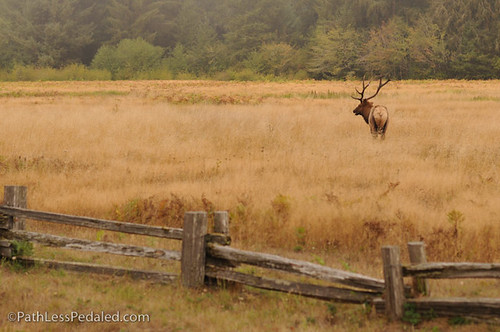
Elk Prairie Campground is right along the very-popular Pacific Coast Bike Route, so it offers a spectacular hiker/biker camping area, set away from the RVs. It’s a bit of a walk to the restrooms, but you get front-row seats to the elk that meander through the prairie (and tussle with each other during Rut in the early fall). If you arrive on bike (or foot), expect to meet lots of other like-minded travelers. At night, the area is fantastically dark and quiet (unless the elk are in Rut, in which case you’ll hear them moan and knock antlers in the dark). Because the campgrouns is located near the ocean (although you forget because of the trees), fog drifts in and out of the area, making it feel even more ethereal.
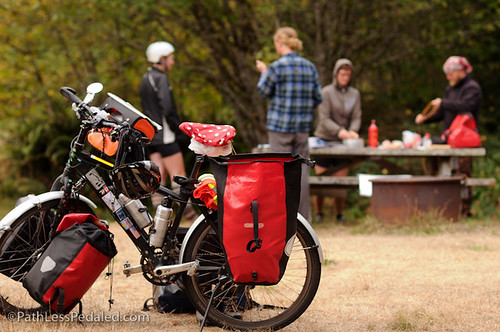
Bear boxes are provided to stash your food and keep the critters away. Showers are available in the main part of the campground, and require quarters. Camping is $5 per night person (for hiker/biker).
4. Enchanted Rock State Natural Area – Texas
When we left Austin and headed NW through Hill Country, everyone told us that we simply had to go to Enchanted Rock State Park. Fine, fine, we said, and plotted our course through the state park. When we got there, we were so charmed that we ended up staying two nights, just to have more time to explore and enjoy.


Enchanted Rock State Park is set at the foot of Enchanted Rock, a single and enormous rock that has been a magical and sacred spot for many. Camping is located at the base of the rocky cliffs or in a grassy field (we recommend the ones by the rocks). Although it’s not a long trek, each site is walk-in only (there are no RV hookups), making them feel particularly secluded and private. Some sites have covered tables, which is great in times of sun or rain. Water is located in the parking area, so bring some sort of container to carry it back to your site. Firewood and showers are available, and WiFi can be accessed at the ranger station.

While you’re there, make sure you carve out time to hike to the top of Enchanted Rock. It’s a short, steep walk up the face of the rock, and the views from the top are incredible. If you visit during the spring, you’ll also be treated to beautiful wildflower blooms. Camping is $15 per night (non-peak times) and $17 per night (peak times), with $6 per person per day entry fee.
5. Chisos Basin Campground – Big Bend National Park, Texas
Chisos Basin is located in the middle of a mountainous fortress. From the main road through Big Bend National Park, you climb 5 miles up a steep and winding road, before reaching the summit and heading1.5 miles down into the 5,400-feet-high valley. From the campground, you are surrounded on all sides by mountain peaks, making sunset a truly magical experience.
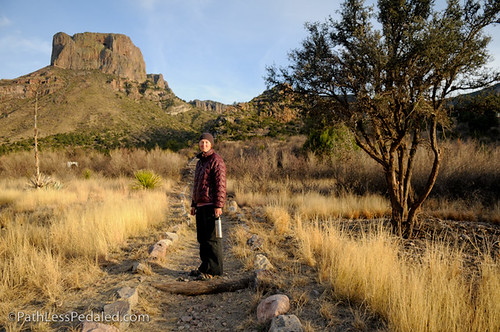
You have to work to get to Chisos Basin on a bike. You have to really want it. And when you tip over the edge and soar into the campground, it will literally take your breath away. This is one of the single most amazingly beautiful locations either of us has ever been.
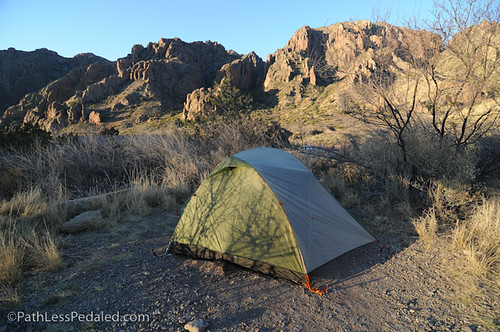
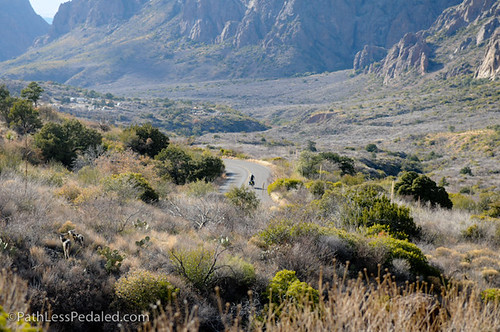
The campground is fairly small, and is predominantly full of people in tents, as many RVs cannot make the drive. Restrooms and running water are available. There are no showers, but we felt it was worth it to be dirty to see this place. A short half-mile hike up the hill takes you to the lodge, visitors center and small store, where you can get a motel room, eat in a restaurant, buy snacks, and learn about the area. Hikes are available in all direction. Camping is $8 per night.
Top 5 Private Campgrounds
1. Fall Hollow Campground – Hohenwald, Tennessee (off Natchez Trace Parkway)
Nearing the end of our Natchez Trace adventure, we stumbled onto Fall Hollow Campground. It was a hot afternoon and we were tired, so we very much enjoyed seeing a bicycle hanging from the ‘campground open’ sign. Bill and Kathy enthusiastically welcomed us, gave us some iced tea, and asked about our trip. We quickly became enamored of this place.
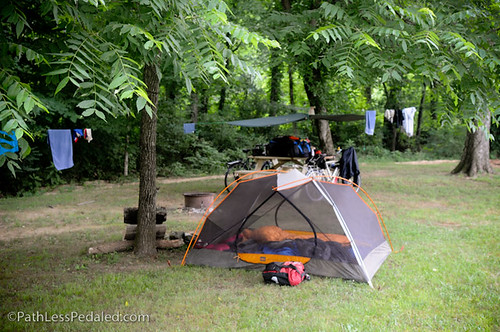

Fall Hollow is a lovely campground. Nestled into the rolling green hills, with plenty of trees and a creek winding along the back of the property. It’s quiet, relaxing, clean, and friendly. Cyclists are definitely welcome here. On Thursday, Friday and Saturday nights, Fall Hollow also operates a restaurant, open for dinner. The food is delicious and well worth reconfiguring a trip to be sure to be there on one of those evenings. Showers are available, although a dip in the cold-water creek may be more refreshing on a hot afternoon.
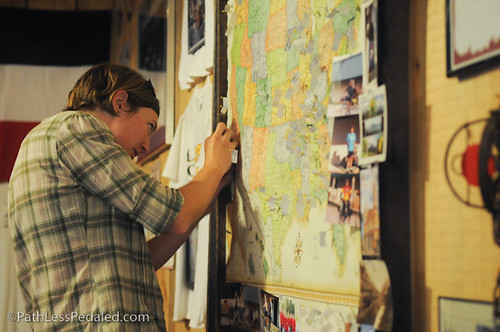
Fall Hollow is extremely convenient if you’re cycling the Natchez Trace, and should be a destination for all road-weary travelers (cyclists, make sure you add your name to the map!). $5 per person per night.
2. Pleasure Point Marina – Lake Claiborne, Louisiana
Our stop at Pleasure Point Marina was complete coincidence and serendipity, as most great things are. We met Russell (the owner) in the nearby town of Homer and he invited us down for the weekend, instead of simply stopping at the state park. As we pitched our tent just ten feet from the edge of the lake, we were thrilled by this change of plans.
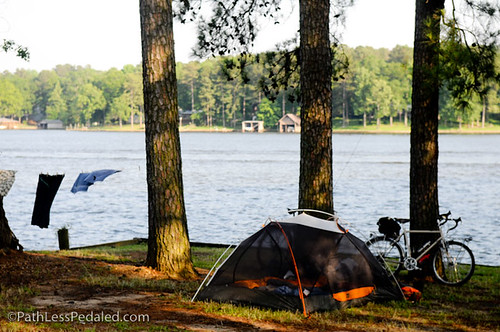
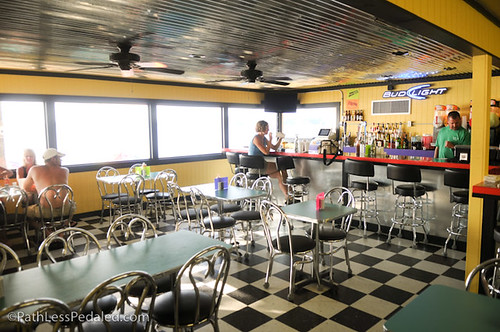
Pleasure Point is mainly an RV camp, but tenters are also welcome. There are very loose delineations between sites, so everyone is friendly with their neighbors, and we enjoyed chatting with the guy camped next to us. The campground is located at the end of a small point of land that juts out into Lake Claiborne. On a hot day, you can sit under the shade of the big trees and enjoy the cool breeze that blows across the lake. When it gets too hot, go inside the air-conditioned café for a cold drink. The café serves some of the best hamburgers around, and now you can get a beer or a margarita with it. We started dubbing Pleasure Point “summer camp for adults,” because it was such a beautiful and relaxing spot, and because the drinks at the bar were so very enticing.

3. Las Ruinas Camping Hostel – Terlingua Ghost Town, Texas
When we rolled into the Terlingua-Study Butte area near Big Bend National Park, we assumed that we would just stay in a cheap motel for the night, assuming that there were no “official” camping options. Then we learned about Las Ruinas, and were delighted by this brand new and absolutely wonderful spot.


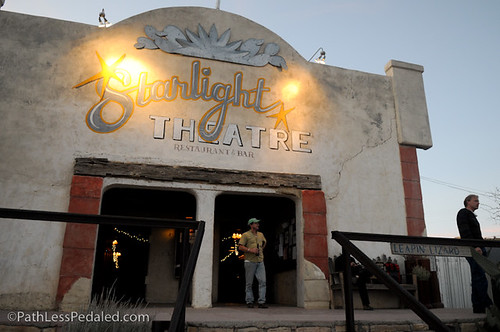
Las Ruinas is a hostel, but they don’t offer beds for you to sleep in, you have to come prepared to camp. If you don’t have your own tent, you can stay in one of their soft-sided cabins, but there’s no furniture inside and they don’t provide sheets. If you do have your own tent, you can pitch it in a little corner of the desert landscape. Las Ruinas has WiFi, a shower and restrooms, an outdoor kitchen, and an old bus that has been converted into a living room/game room/movie room. One of the greatest assets of Las Ruinas is its location. It’s right in Terlingua Ghost Town, which is the old mining camp that was abandoned and is now being revitalized. A five-minute walk will take you to the Starlight Theatre for dinner. Then grab a beer and sit outside on the long porch and watch the sunset and listen to the locals tell some wild stories.
The Big Bend region of Texas should be on everyone’s list of must-visit locations. And when you come to Terlingua, stay here.
4. Rusty’s RV Ranch – Rodeo, New Mexico
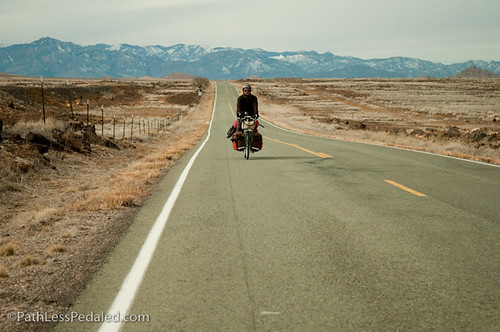
When we headed east from Bisbee, Arizona, we knew that we wanted to stay as far south as possible, so we chose Hwy 80 and Hwy 9, and we prepared ourselves for a very empty length of road. Fortunately, at the junction of the two highways is the small town of Rodeo, New Mexico. And a few years back, Rusty opened her RV Ranch, enticing travelers to this beautifully empty desert scenery.
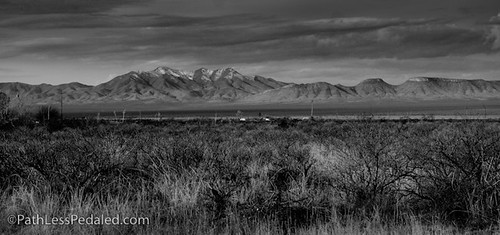
We arrived late in the afternoon, tired from a long day of riding into a headwind, dreading the cold night ahead of us – and Rusty welcomed us with a smile. She opened her RV Ranch just a few years ago, on a small plot of desert land, in the foothills of the stunning Chiricahua Mountains. There is a small patch of grass behind the office where she puts folks in tents (amazingly, we weren’t the first folks she’d seen arrive on bicycles). The office also has WiFi and a restroom with a shower, so it’s a wonderfully convenient space to camp out. Because the temperatures were supposed to drop into the low 20s that night, Rusty moved her small portable heater into the bathroom, so that we could shower in a warm room and have a place to take the chill off.
In the morning, we had our coffee and breakfast in the office and chatted with Rusty and some other travelers. It was a wonderful gem of a place in the middle of nowhere. Camping $24.
5. Manchester Beach KOA – Manchester Beach, California
Manchester Beach is along Hwy 1 on the Northern California coast. The area is beautiful and rugged. The state parks, however, leave a lot to be desired. When we rolled into Manchester Beach State Park, we discovered a bland campground with only pit toilets and no other facilities. While we waited for the camp hosts to return to change our $20 bill, Russ rode back up the road a half mile to the KOA next door, to see if they had a market with cold drinks. He discovered a beautiful campground with a great hiker/biker deal.

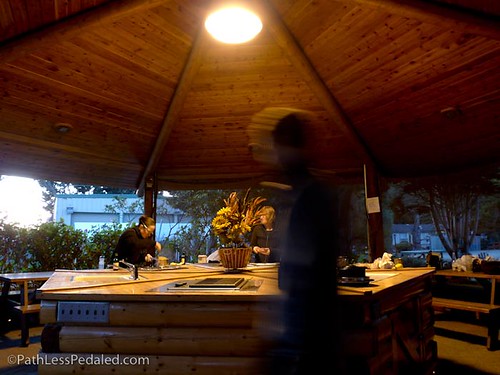
The Manchester Beach KOA has to be the only KOA in the US that offers a hiker/biker discount and one of the few that doesn’t completely rip you off. For $9 per night per person, you have complete access to their wonderful facility – including a kitchen with gas grills, hot showers, laundry, a pool and a hot tub (which my sore muscles were extremely thankful for). More than all the above, because they offered a great hiker/biker deal, all the bike tourists that were camping in that stretch of coastline that night were set up at the KOA. We shared space with at least a half dozen other people and swapped stories into the evening.
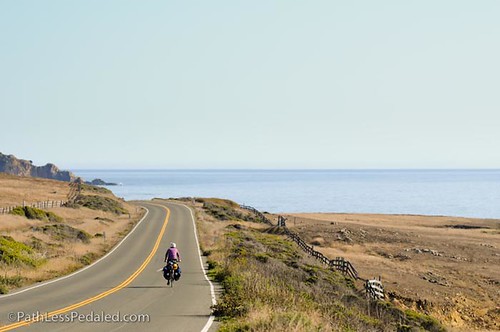
The difference between the KOA and the state park was so stark that it was an instantaneous decision, and we felt it was well worth the extra few dollars. If you’re planning a trip down this stretch of road, we highly suggest the KOA over the state park.